// Overview
Personalizing the Learning Curve
Verbi addresses the challenges of passive studying by turning user-provided materials into dynamic, interactive quizzes and learning tools. Developed rapidly over an intense 3-day hackathon, it leverages LLMs to create a truly adaptive environment.
The Problem & Solution: Traditional study methods often involve passively reading notes or textbooks, leading to lower retention and engagement. Verbi tackles this by automatically generating quizzes from study material, tracking progress over time, and adapting question difficulty so the learner is always working at the right level — making studying significantly more effective and engaging.
Watch the video below for a complete walkthrough of the Verbi application and its features developed during the hackathon. Detailed explanations and screenshots follow.
↑ Platform walkthrough and core features demonstration
It empowers learners by automatically generating quizzes from their notes, tracking their progress with insightful analytics, and adapting question difficulty based on performance — all built within a challenging 3-day timeframe using React and Next.js.
// Features
Core Intelligence
Quiz Generation
Create personalized quizzes from topics, text, or PDFs using advanced AI algorithms.
LLM Personalization
Large Language Models analyze performance to tailor questions to the right difficulty level.
Spaced Repetition
Optimize long-term retention with a scientifically-backed memory system.
PDF OCR Pipeline
Seamlessly upload and process lecture slides for immediate content generation.
Focused Practice
Strengthen weak areas with targeted exercises and explanations instead of generic review.
Progress Tracking
Measure growth through score trends, mastery visuals, and dashboard-level learning metrics.
Continuous Improvement
The AI constantly evolves, learning from user interactions to provide an ever-improving and increasingly personalized experience.
AI Note Assistant
Interact with uploaded notes for in-context explanations, summaries, definitions, and expansions — without leaving the material.
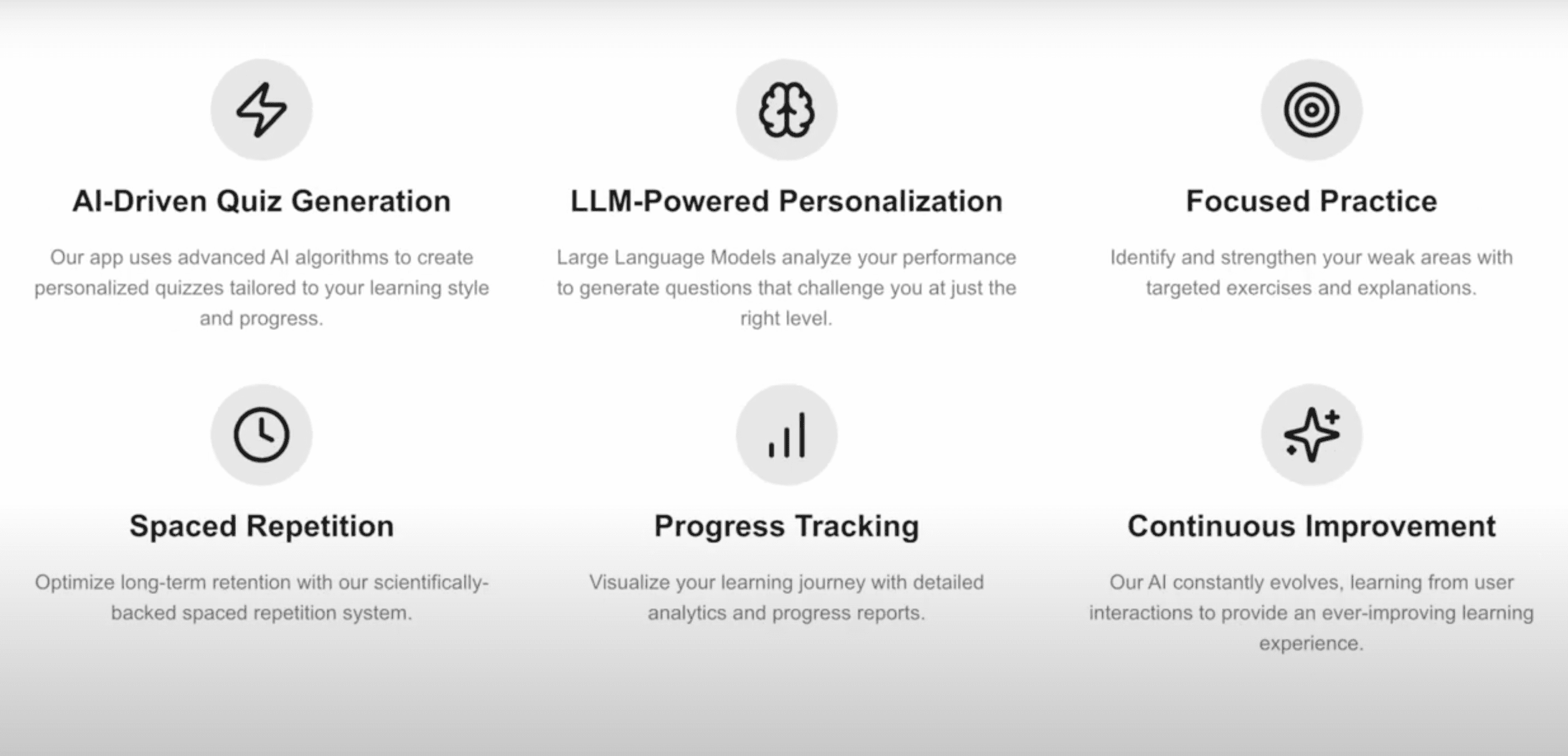
Integrated Suite
Verbi combines multiple AI-powered study tools into one workflow, turning notes, PDFs, and topics into active testing, feedback, review, and contextual explanation.
// Methodology
Intelligent Quizzing
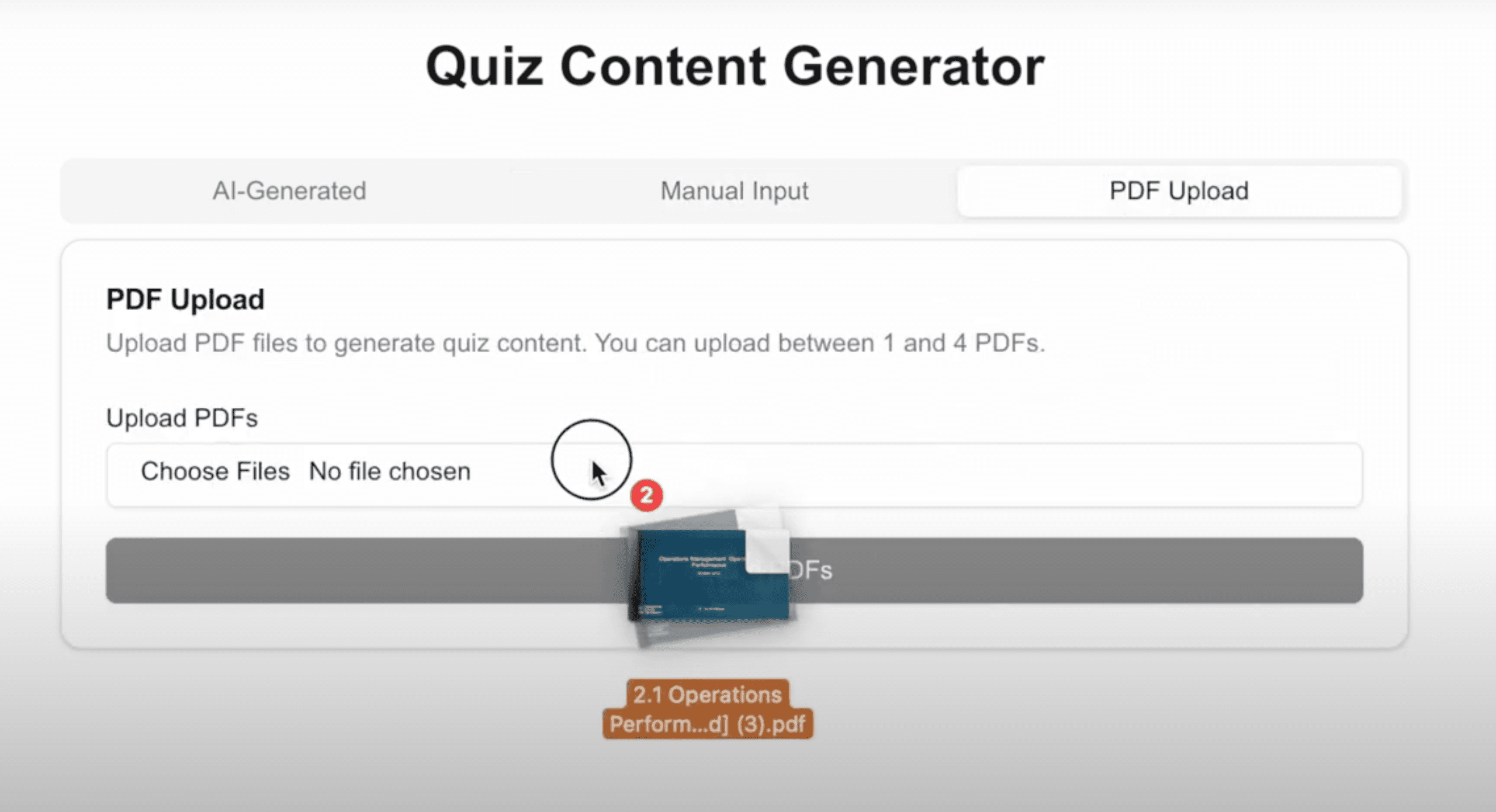
From PDF to Quiz
Verbi offers three flexible generation modes: enter a topic and let the AI produce relevant questions, paste notes directly, or upload PDF documents such as lecture slides or textbook chapters. Verbi intelligently parses the uploaded content, extracts key concepts, and transforms them into interactive questions instantly — saving the time normally spent building review material by hand.
// AI Logic
The Adaptive Engine
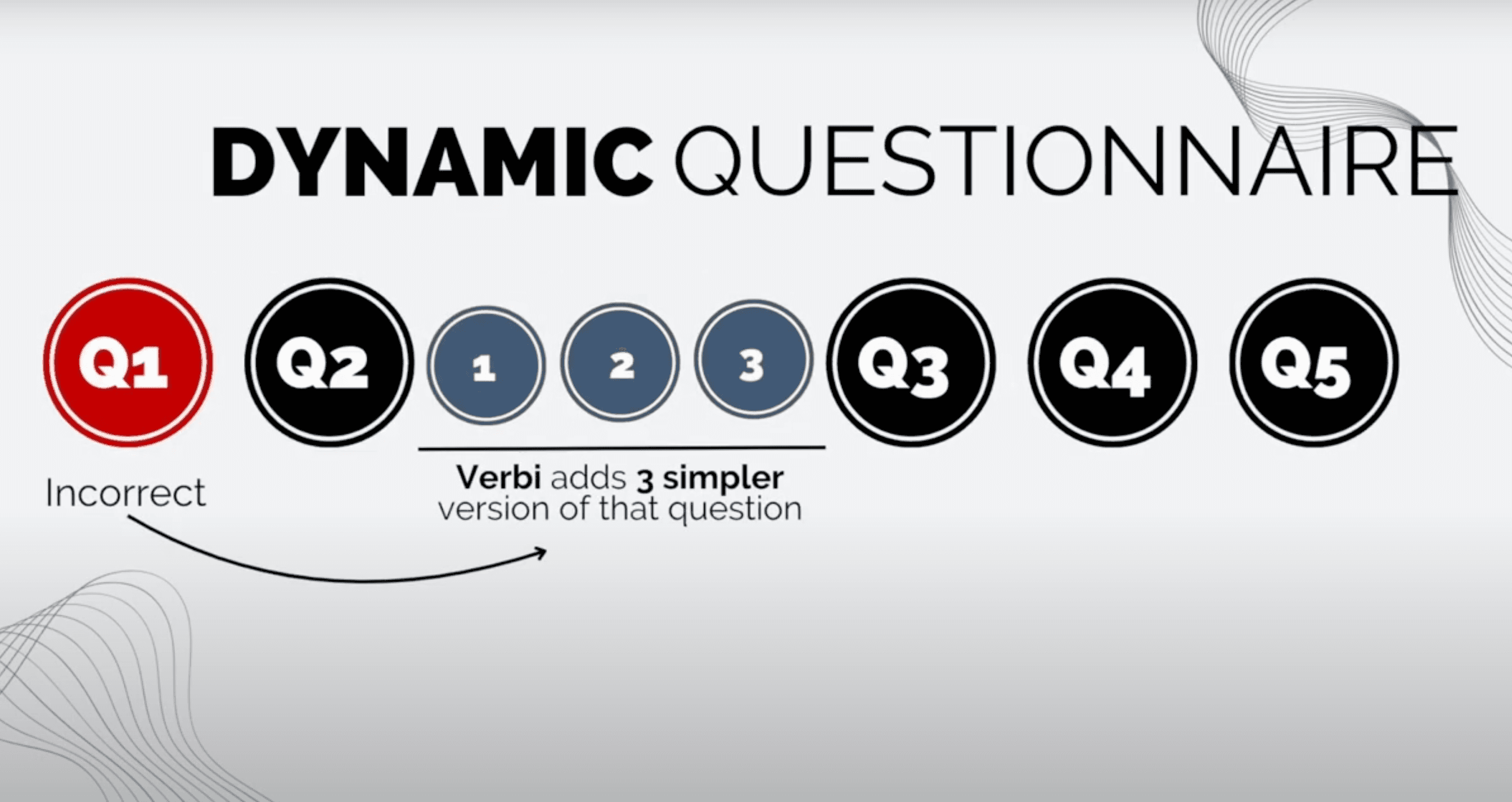
Dynamic Difficulty
If a learner answers incorrectly, Verbi identifies the knowledge gap and introduces simpler, related questions to rebuild a solid foundation around that subtopic. If the learner is consistently correct, the system escalates to deeper reasoning tasks and more challenging questions to push understanding further — ensuring the experience is always calibrated to current level.
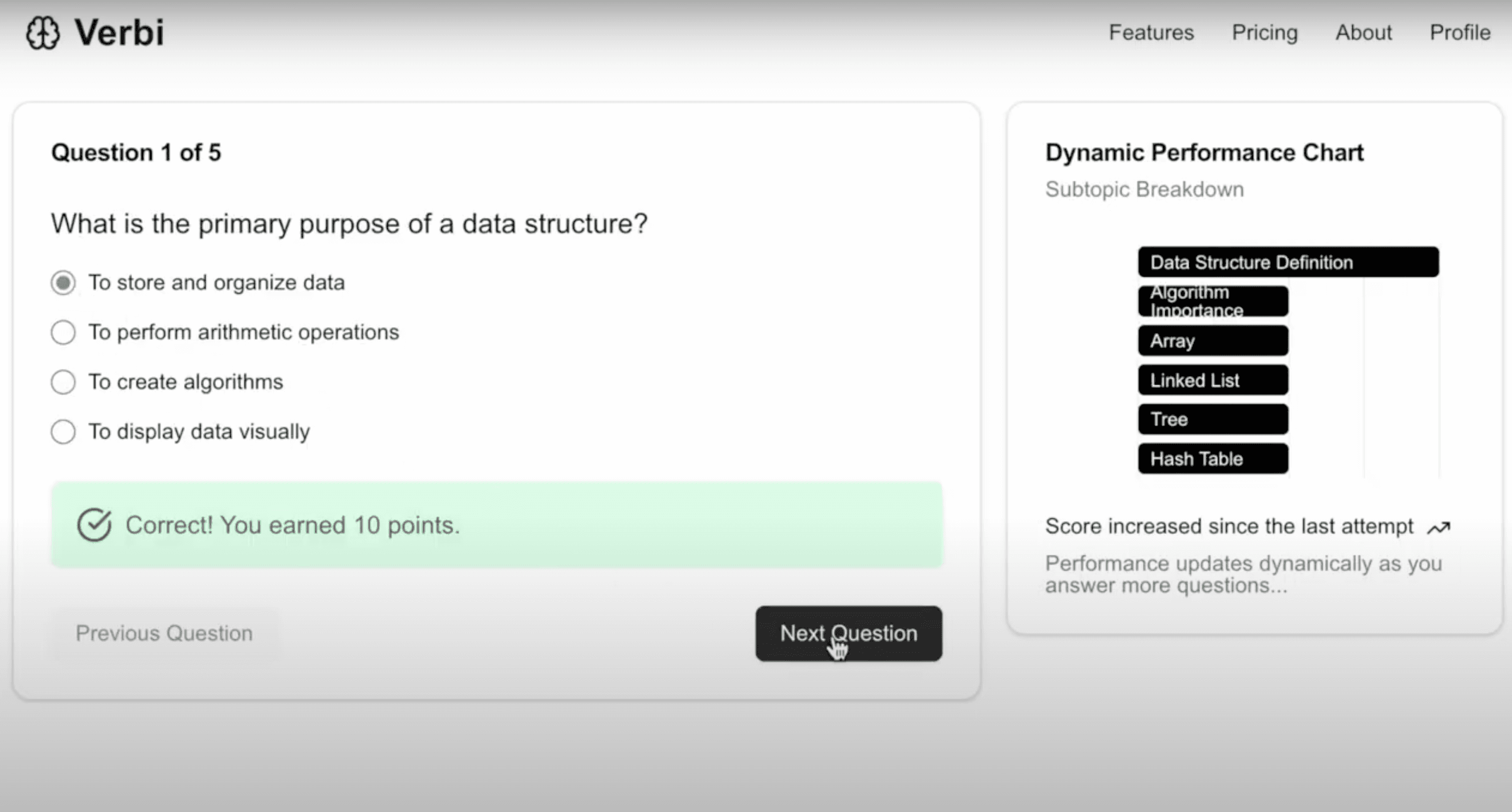
Real-time Feedback
The Dynamic Performance Chart tracks mastery across different subtopics as the quiz unfolds, giving immediate feedback on strengths and weaknesses instead of waiting until the end.
// Analytics
Deep Insights
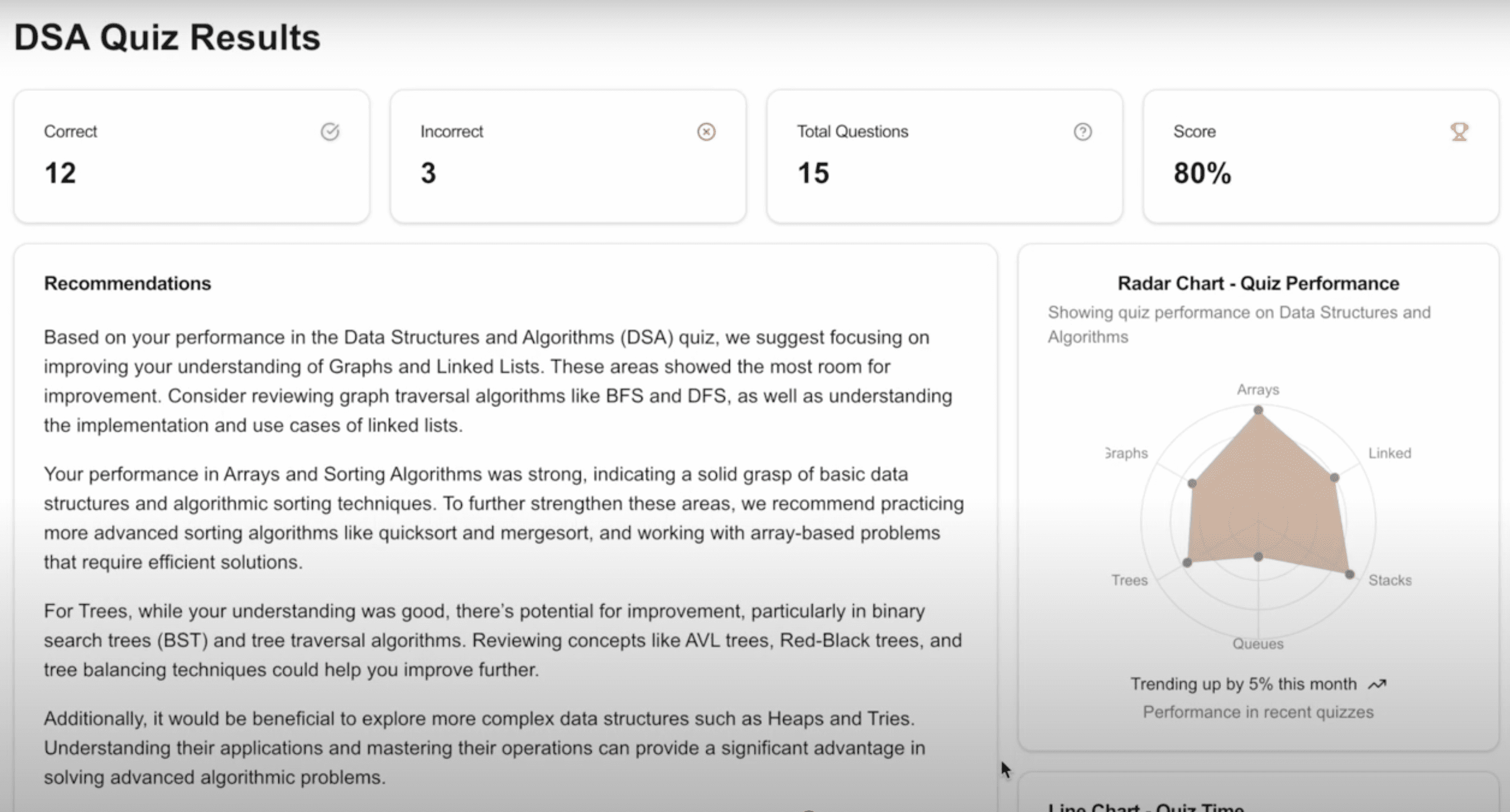
Post-Quiz Insights
After completing a quiz, you receive a detailed breakdown including your score, correct and incorrect answers, and AI-generated recommendations pointing to specific areas for improvement. This closes the feedback loop immediately, turning every quiz attempt into an actionable study plan.
Radar Mapping
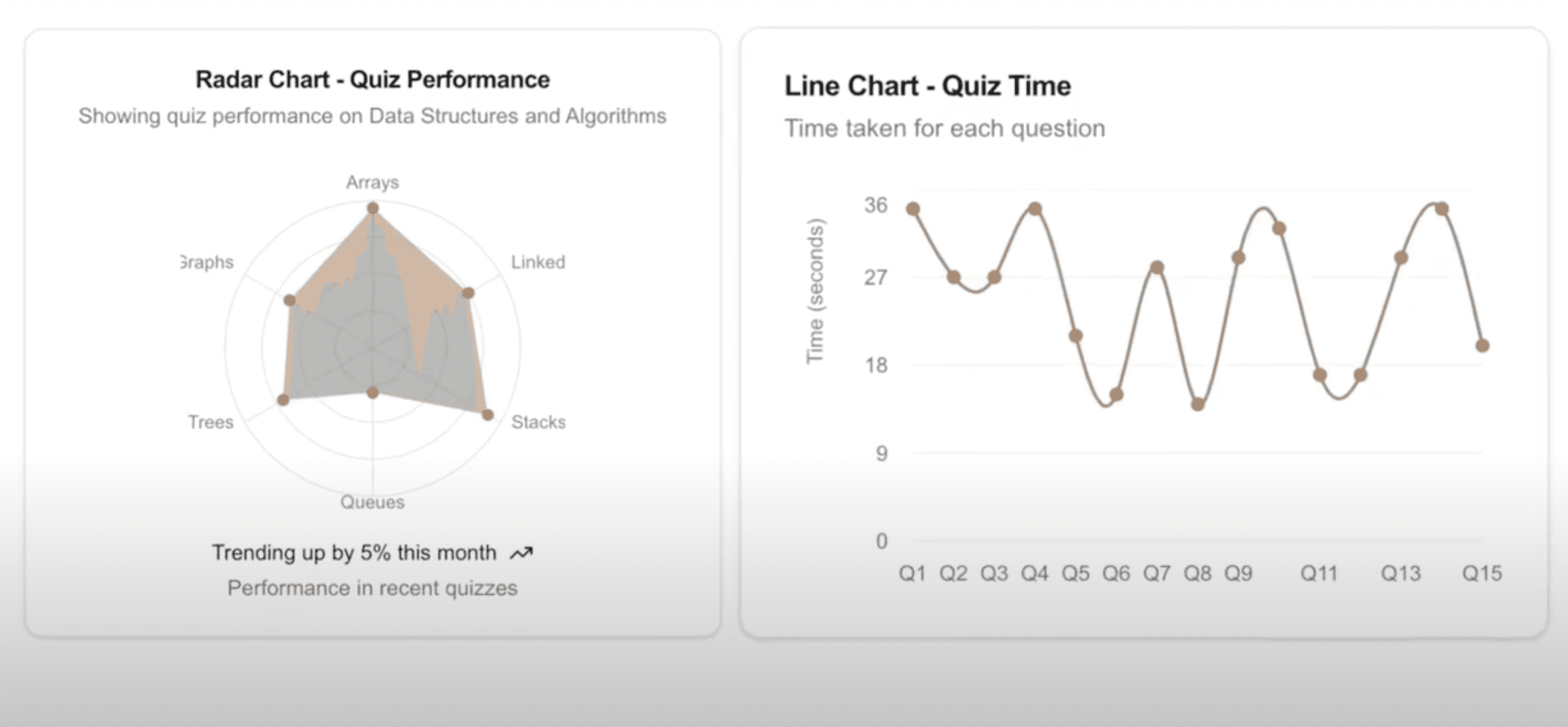
Radar charts pinpoint topic mastery across every subject covered in the quiz, while time-tracking line charts reveal where cognitive load is highest question by question — making it easy to know exactly where to focus next.
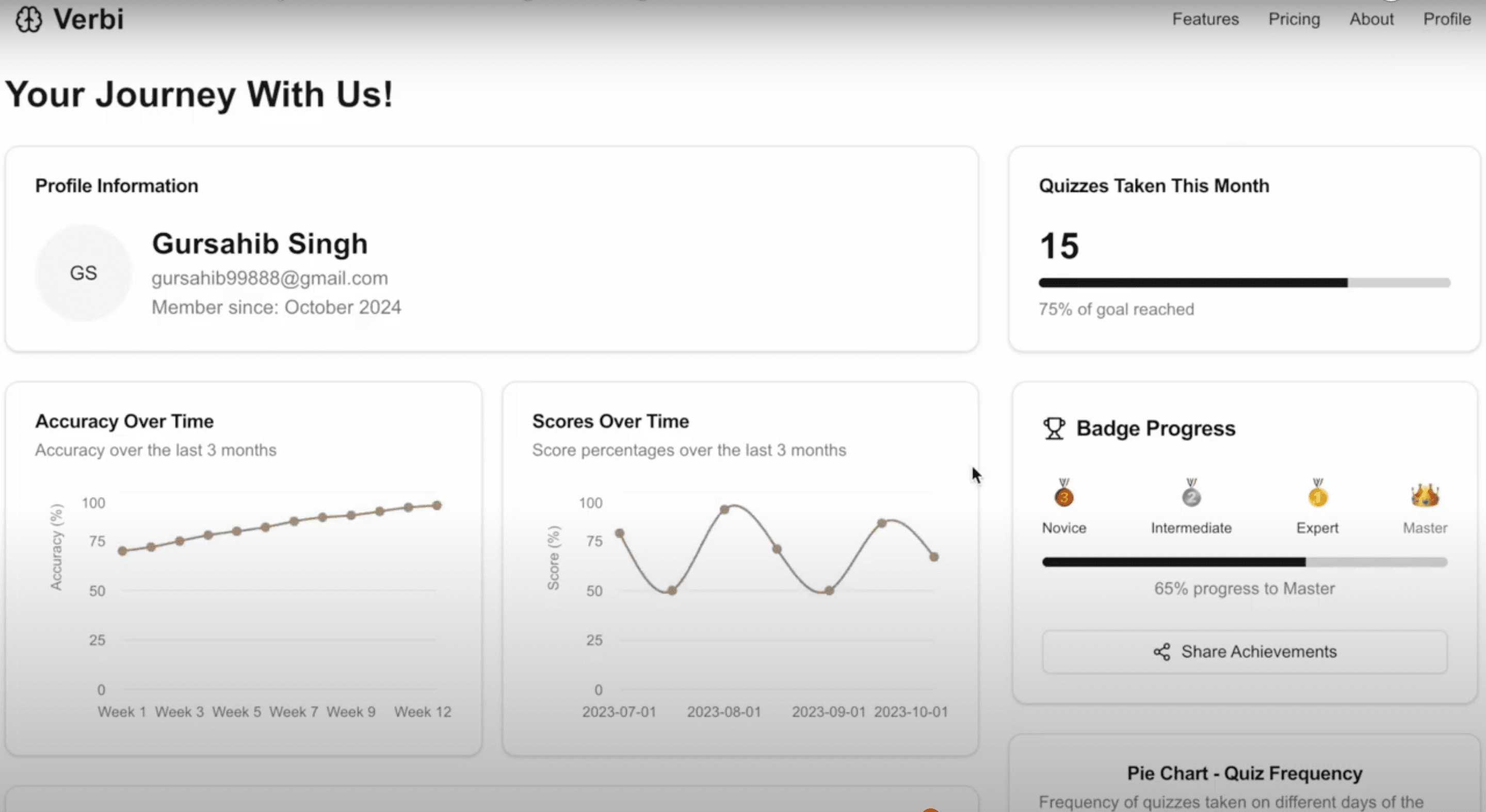
Central Dashboard
A holistic overview of the learning journey tracks overall accuracy, score trends across quizzes, badge progress for mastering levels, quiz frequency, and review folders for recently missed questions — giving a single place to monitor and steer the entire study routine.
// Interaction
Smart Notes
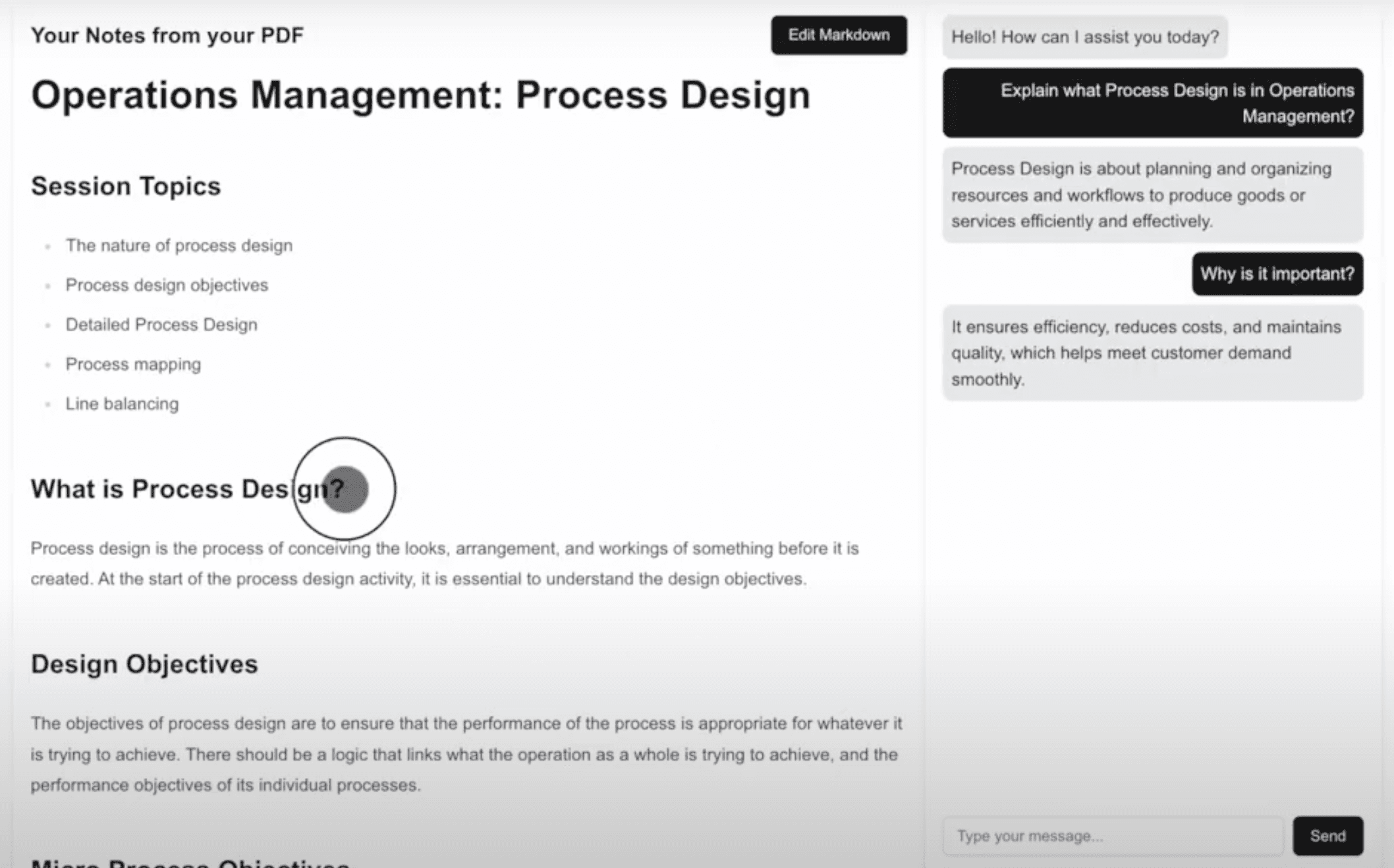
Contextual Mentoring
Highlight any text within an uploaded document and Verbi's AI assistant surfaces four targeted actions: explain the concept (optionally using analogies drawn from your declared interests), expand the topic for deeper detail, define specific terms, or summarize the selection into concise bullet points.
Powered by a specialized RAG pipeline, this feature provides immediate in-context clarification without ever leaving the study material — making static notes feel like an interactive tutor.
// Engineering
Hackathon Architecture
Because Verbi was built in a 3-day hackathon window, engineering decisions had to balance ambition with execution speed. Four challenges defined the build:
- Time constraint — implementing a feature-rich AI application in 72 hours required ruthless prioritization and rapid iteration.
- LLM reliability — designing prompts that consistently produced well-structured adaptive questions and contextual note explanations across varied input quality.
- PDF parsing variability — handling diverse document structures and reliably extracting meaningful content from lecture slides and textbook scans.
- UI under pressure — delivering an intuitive, visually coherent interface in React and Next.js within the same compressed timeline.
// Retrospective
Future of Learning
Verbi successfully validates the potential of AI for personalized education. Built in just 72 hours, it demonstrates how rapidly one can move from static PDFs to interactive adaptive environments — and how far a small team can push a generative AI integration under real constraints.
The project serves as a strong proof-of-concept for more intelligent and engaging study systems, with clear room to evolve into a broader platform. The plan is to release Verbi as open-source to foster community contribution and make adaptive AI-driven learning more widely accessible. The repository is available on GitHub.