// Overview
Democratizing institutional intelligence
AlphaSage AI is a comprehensive trading and investment platform designed to provide users with advanced tools for market analysis, strategy development, and informed decision-making. Leveraging the power of artificial intelligence, the platform aims to democratize access to sophisticated research capabilities and backtesting functionalities traditionally reserved for institutional traders.
This project was built with a focus on real-time data processing, robust backtesting infrastructure, and an innovative AI-driven pipeline for fundamental and sentiment analysis — combining modern web technologies, specialized Python processing, and cutting-edge LLM models into a single cohesive product.
The result is a robust, intuitive, and intelligent toolkit for traders and investors navigating today's financial markets.
Complete walkthrough of the AlphaSage AI platform, with detailed screenshots and explanations below.
↑ Platform walkthrough and core features demonstration
// Features
Core Intelligence
Real-Time Charting
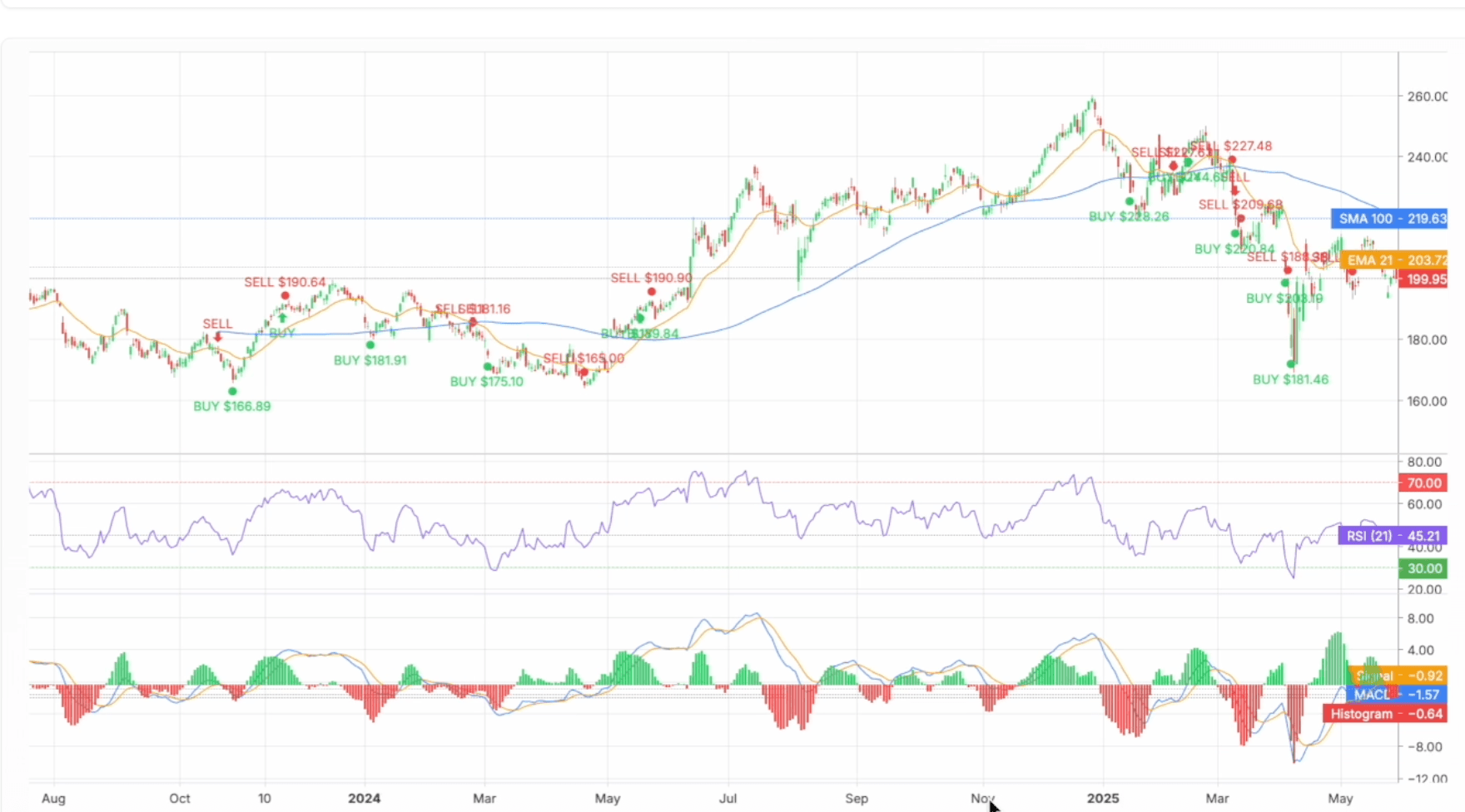
Professional-grade charting with support for multiple ticker symbols, timeframes, Volume, and custom-calculated indicators including SMA, EMA, RSI, MACD, and Bollinger Bands.
Python Backtesting
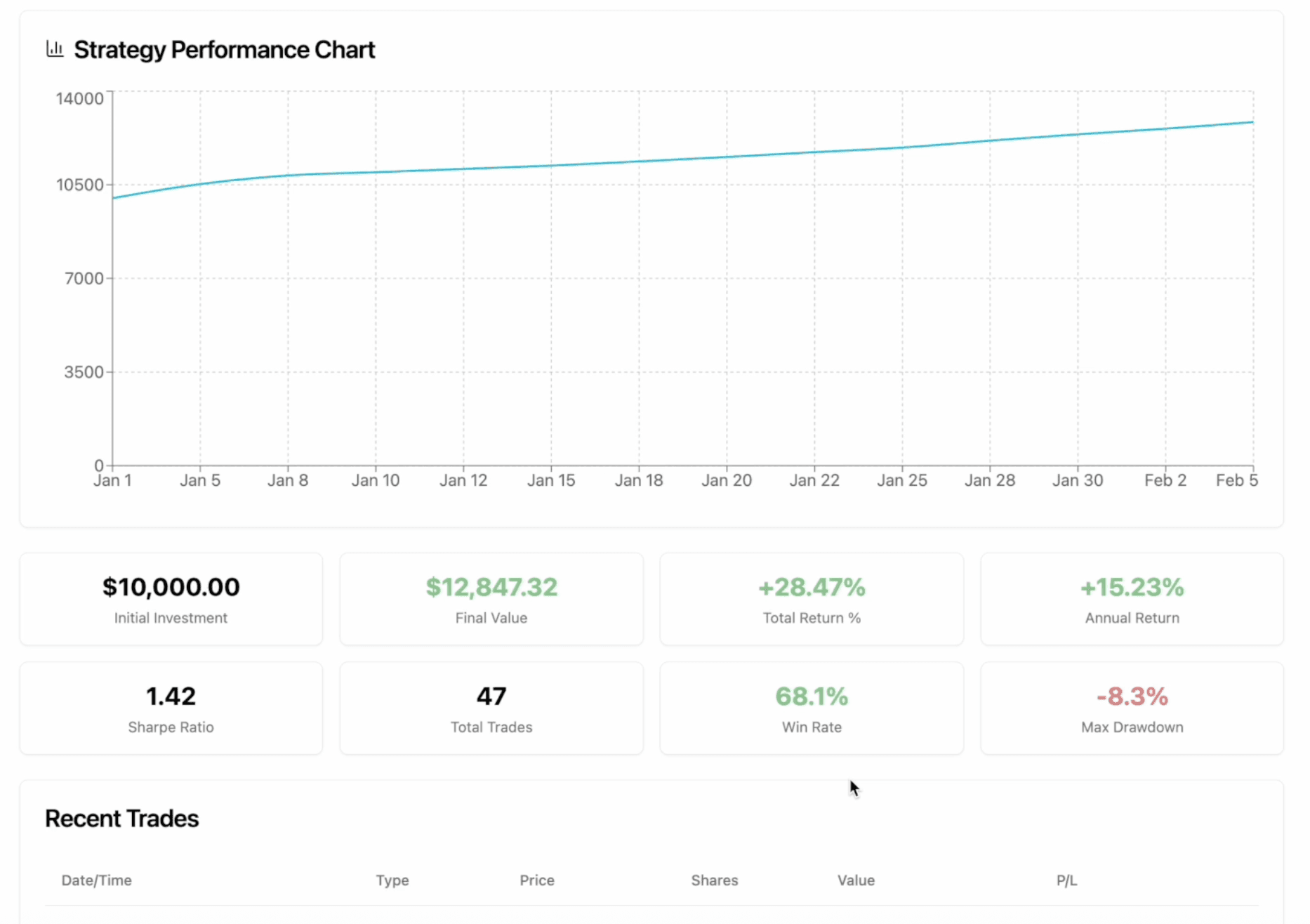
Integrated editor for writing and testing custom trading strategies using historical data, with detailed performance metrics and trade-level output.
AI Report Generation
A sophisticated pipeline using Gemini for deep company analysis and Groq-hosted LLaMA for polished HTML report formatting.
Configurable Settings
Users can manage API keys, default chart settings, risk tolerance preferences, and platform notifications from one control surface.
// Methodology
How It Works
AlphaSage AI employs a multi-layered architecture to deliver its comprehensive suite of trading tools:
The user interface, built with Next.js and TypeScript, interacts with the backend to request and display real-time and historical OHLC and Volume data, primarily sourced from the Yahoo Finance API.
The frontend integrates robust charting libraries like TradingView to render dynamic market charts. Technical indicators are calculated using custom-written formulas and overlaid on these charts.
Users input trading strategies, which are then processed by a Python-based backend engine, leveraging libraries for efficient historical data processing and strategy simulation.
- Deep Analysis with Gemini: A detailed prompt guides Google's Gemini 2.5 Pro model to perform comprehensive company analysis covering fundamentals, sentiment, and outlook.
- Structured Output & Parsing: Gemini returns a rich, text-based report that is programmatically parsed by the backend into reusable sections.
- Dynamic HTML Conversion with LLaMA on Groq: Each parsed text section is converted into well-formatted, visually appealing HTML by the LLaMA 3.2 model via the Groq API, ensuring a polished, presentation-ready output.
- Report Stitching & Delivery: HTML sections are combined into a multi-page report, delivered in-app and available for PDF download.
This pipeline automates complex research work and delivers deeper analysis in a polished, presentation-ready format.
// Engineering
System Architecture
The architecture splits responsibilities cleanly: Next.js and TypeScript power the interactive frontend, while a Python backend (Flask/FastAPI) handles backtesting and AI orchestration. Market data comes from Yahoo Finance as real-time and historical OHLC plus Volume series.
Supabase (PostgreSQL) supports authentication, user settings, saved strategies, and cached data, while custom-written formulas drive all indicator calculations. Deployment targets Vercel for the frontend and a cloud service such as AWS Lambda or Google Cloud Run for the Python backend.
// Walkthrough
Visual Evidence
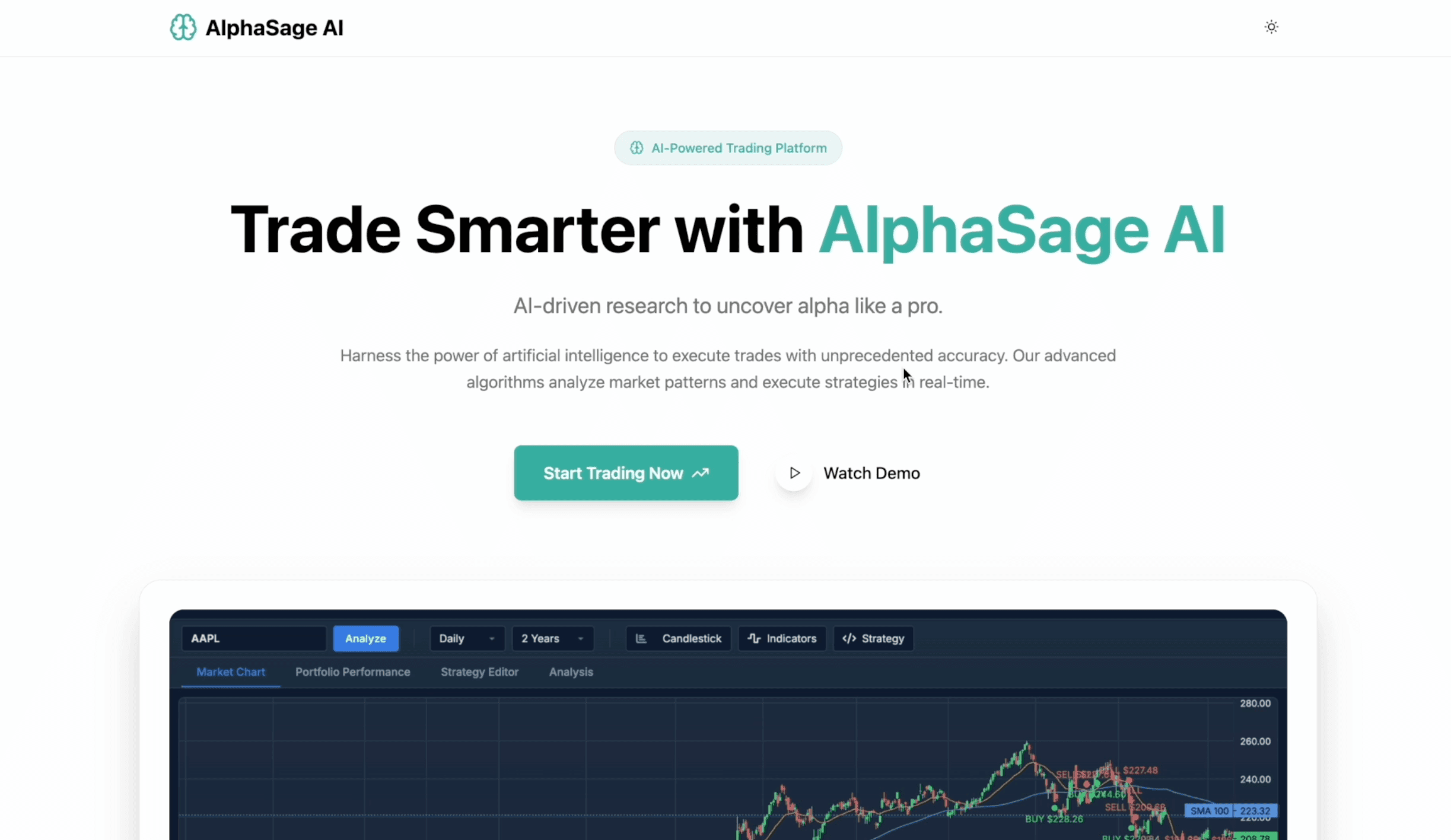
Landing Experience
A clean, modern landing page that introduces the platform's AI-driven trading workflow without overwhelming the user before they reach the core tools.
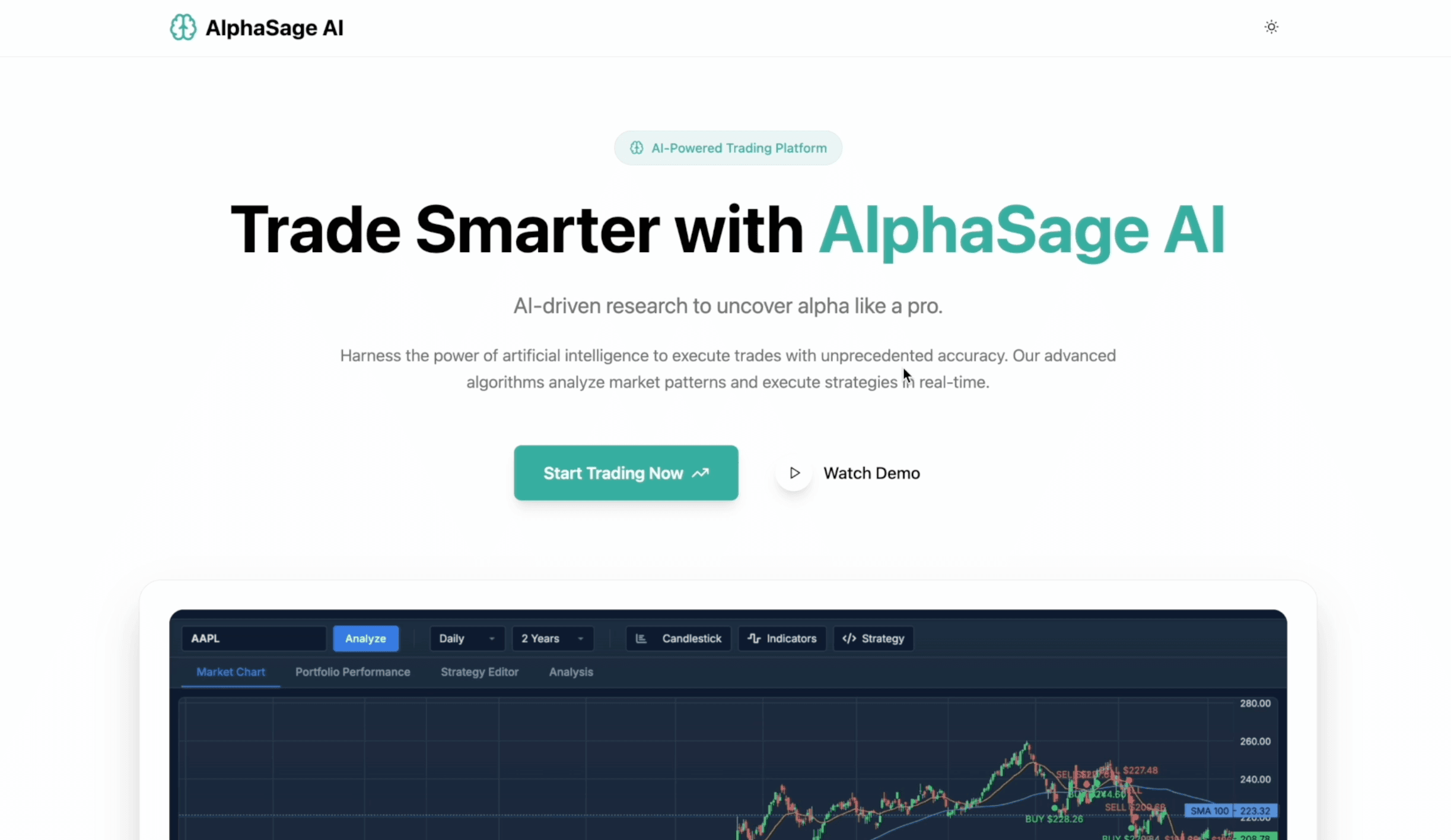
Chart Analysis
Interactive chart analysis interface showing candlestick data with SMA, EMA, RSI, MACD, Bollinger Bands, and Volume, alongside controls for ticker symbol, time range, interval, and chart style.
Strategy & Backtesting
A Python strategy editor paired with backtesting output such as Initial Investment, Final Value, Total Return, Annual Return, Sharpe Ratio, Total Trades, Win Rate, Max Drawdown, and recent trade logs.
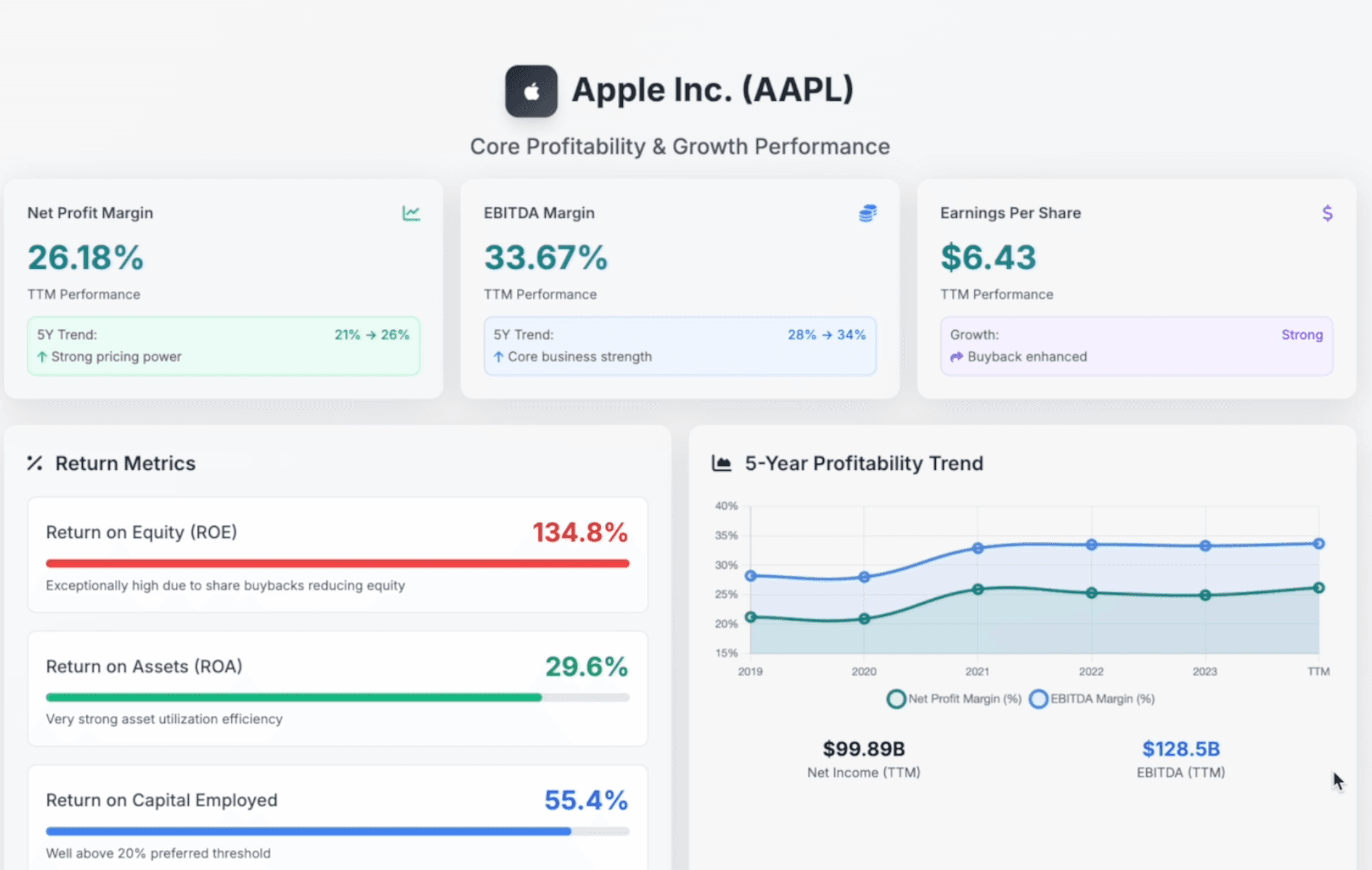
AI Research Assistant
Automated generation of detailed investment reports through a pipeline that moves from user prompt to financial data retrieval, Gemini analysis, and LLaMA/Groq formatting into a multi-page HTML report.
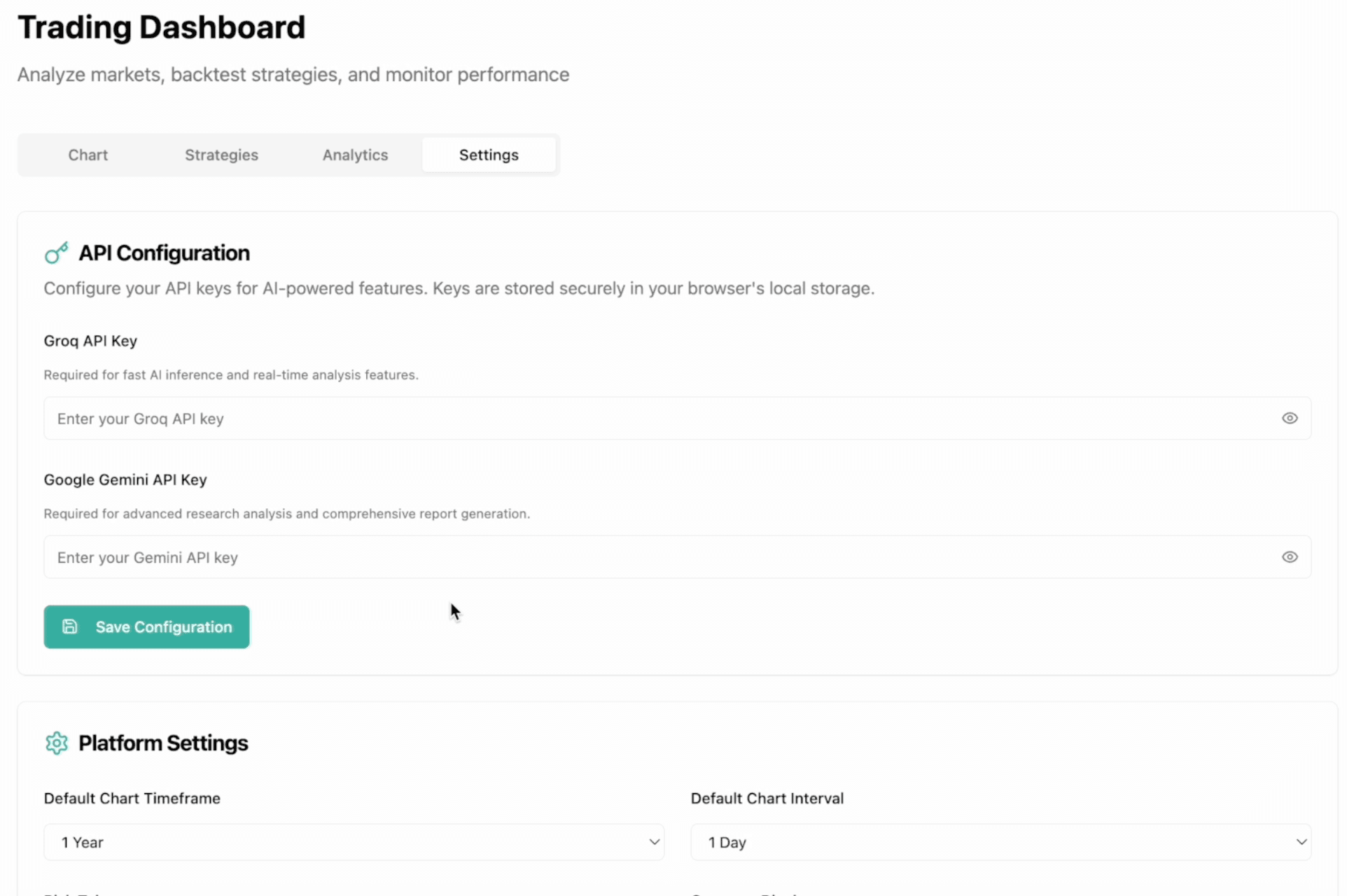
Platform Control
Granular control over dark and light mode, Gemini and Groq API keys, default chart timeframes, risk tolerance profiles, and platform notification preferences.
// Retrospective
Technical Fortitude
Developing AlphaSage AI was a journey through modern web development, backend processing, and cutting-edge AI integration. Key hurdles included:
Designing and implementing the multi-step AI pipeline (Gemini for analysis, parsing, then LLaMA via Groq for HTML) required careful prompt engineering, error handling, and ensuring data flow integrity between every stage.
Efficiently and reliably ingesting and displaying market data from the Yahoo Finance API, while managing potential rate limits and data inconsistencies inherent to financial data feeds.
Seamlessly connecting the Next.js frontend with the Python backtesting engine involved designing clean API and inter-process communication boundaries for passing strategies in and performance results back out.
Developing and validating custom formulas for technical indicators (SMA, EMA, RSI, MACD, Bollinger Bands) to ensure accuracy mirroring industry standards across all supported timeframes.
// Roadmap
Future Vision
Future enhancements for AlphaSage AI are envisioned to further expand its capabilities and user experience:
Implementing live trading capabilities by integrating with brokerage APIs for real order execution.
Developing a more advanced strategy builder with a visual, no-code/low-code interface — lowering the barrier beyond Python scripting.
Expanding AI report generation to include more dynamic visualizations and interactive chart elements within the report itself.
Increasing the sophistication of market sentiment analysis by incorporating more diverse data sources including news feeds, social media, and earnings call transcripts.
Creating a community feature for users to share strategies, AI report prompts, and investment insights with other platform members.
// Conclusion
The Edge of Innovation
AlphaSage AI stands as a testament to what becomes possible when Next.js, TypeScript, Python, Google Gemini, and LLaMA via Groq are combined into a single cohesive product workflow.
Its core differentiator — the dual-LLM report-generation pipeline — automates complex financial research and delivers professional-grade insights at speed. The platform offers traders and investors a robust, intuitive, and intelligent toolkit for navigating the markets with greater context and confidence.